ABFFE Seeks Children’s Book Art for Holiday Auction
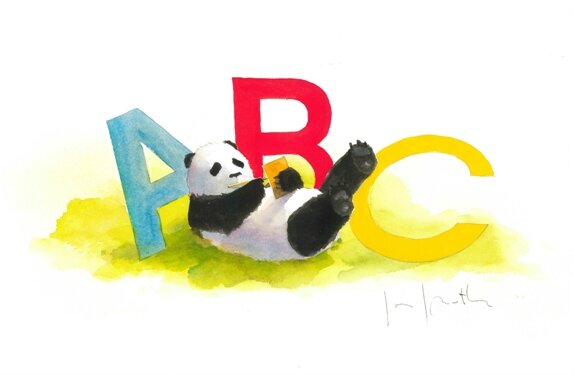
ABFFE is asking illustrators to help raise money to defend the free speech rights of kids by contributing to an online auction of children's book art. A donation form is available here. The deadline for submitting art is Oct. 31.
The auction will go live at noon on December 1 and will last one week. Use this link to join.
Proceeds of the auction help support the Kids’ Right to Read Project (KRRP), which is co-sponsored by ABFFE and the National Coalition Against Censorship.
Booksellers Challenge Arizona Nude Photos Law
ABFFE joined Media Coalition and a broad coalition of bookstores, newspapers, photographers, publishers and librarians in a lawsuit filed in federal court on Tuesday challenging a new Arizona law that criminalizes speech protected by the First Amendment.
The law makes the display, publication or sale of nude or sexual images without the subject's explicit consent a felony punishable by nearly four years in prison. The law was passed with the stated intent of combating "revenge porn," a term popularly understood to describe a person knowingly and maliciously posting on the Internet an identifiable, private image with the intent and effect of harming an ex-lover. But the law is so broad and vague that it could send people to prison for sharing material that is fully protected by the First Amendment.
"This law puts us at risk for prosecution," said Gayle Shanks, owner of Changing Hands Bookstore, one of the plaintiffs. "There are books on my shelves right now that might be illegal to sell under this law. How am I supposed to know whether the subjects of these photos gave their permission?" Changing Hands has stores in Tempe and Phoenix.
Four other booksellers are plaintiffs: Antigone Books and Mostly Books in Tucson; Bookmans, which has stores in Tucson, Phoenix, Mesa and Flagstaff, and Copper News Book Store. They are joined by Voice Media Group, which publishes the Phoenix New Times, the Association of American Publishers, the Freedom to Read Foundation, the National Press Photographers Association and ABFFE.
Because this is the first challenge to a "revenge porn" law, there has been extensive media coverage. Tricia Clapp, owner of Mostly Books, was interviewed by a Tucson TV station. Watch the video.
Read more about the case.
|
HERE'S TO Banned Books Week!

Booksellers around the country participated in Banned Books Week, the national celebration of the freedom to read. Hundreds created displays of banned and challenged titles, and many organized events.
Bookmans in Arizona, which sponsors its own Anti-Censorship Month in September, created events for both adults and kids, including a James and the Giant Peach Party, a Hogwarts House Party and a Free an Idea Author Fair. At its Flagstaff store, Bookmans provided a setting and props for customers to take "mugshots" of themselves with their favorite banned books.
In Chicago, City Lit Books invited local students to read from Alan Moore's Watchmen and other censored books. In San Francisco, Books Inc.'s book clubs and story time events read banned and challenged works. Books Inc. released a video as the capstone of its celebration.
Two booksellers from Browseabout Books in Rehoboth Beach, Delaware, helped get things started last week on KPFA, a radio station in Berkeley, California, by discussing their fight against the censorship of emily m. danforth's The Miseducation of Cameron Post. The book, which is the story of a young lesbian, was dropped from a summer reading list in the school district that includes Rehoboth Beach.
Susan McAnelly, the manager of the bookstore, and Madison Bacon, an employee who just graduated from the local high school, were interviewed on the Project Censored radio show, which is rebroadcast on the Pacifica radio network. Explaining why Browseabout agreed to distribute 250 donated copies of the book to students, McAnelly said, "We took the stance that as an independent bookstore our job is to put books in people's hands. We're very passionate especially about putting books in kids' hands-in teenagers' hands." The program is available online, and the 12-minute segment featuring the McAnelly and Bacon begins at 34:56.
Independent bookstores are enthusiastic supporters of Banned Books Week, but as small businesses many do not have the resources to participate. To make it as easy as possible, the American Booksellers Foundation for Free Expression (ABFFE), the bookseller's voice in the fight against censorship, has joined the Ingram Content Group in distributing a free promotional kit that contains everything a bookstore needs to create a display, including a full-sized poster, "Caution" tape, bookmarks, stickers, and a flyer with detailed information about last year's book challenges. One hundred and sixty bookstores ordered the kit.
|
PLEASE DONATE! HELP US PROTECT YOUR FREADOM.

School Censorship Is Flourishing
Because many book challenges occur when students return to school in September, there are almost always fresh cases to discuss during Banned Books Week. This year is no exception. It was reported this week that the Highland Park School District, outside of Dallas, Texas, had removed seven books from the curriculum:The Absolutely True Story of A Part-Time Indian, The Art of Racing in the Rain, The Working Poor: The Invisible in America, Siddhartha, An Abundance of Katherines, The Glass Castle: A Memoir and Song of Solomon. The books will be reviewed by committees made up of teachers, students and parents. The Kids' Right to Read Project (KRRP), which is co-sponsored by ABFFE, is writing to school officials.
KRRP is intervening in two other new cases. After a complaint by a parent, school officials in Wendell, North Carolina, removed Toni Morison's The Bluest Eye from the reading list for an AP English class and began requiring parental permission before students can be assigned Alice Walker's The Color Purple. In South Williamsport, Pennsylvania, a high school principal cancelled plans to present Monty Python's Spamalot because it included "homosexual" themes. The director has been fired.
FREE Speech
BOOKSHELF
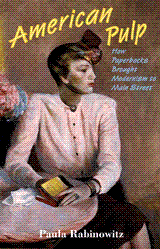
Read ABFFE's Interview with Paula Rabinowitz author of American Pulp: How Paperbacks Brought Modernism To Main Street
|
 Print Page
| Contact Us | Sign In | Register
Print Page
| Contact Us | Sign In | Register


.jpg)